
Ride-On Luggage Airport Transfers Philippines: Summit Glide Curb-to-Terminal Guide
Airport transfers in the Philippines are often the hardest part of a domestic trip: hotel lobby to curb, parking building to terminal doors, drop-off lane to check-in queue, then the reverse after landing. This page is for shoppers comparing ride-on luggage airport transfers Philippines setups with NEXORA Summit Glide — specifically the home/hotel ↔ airport curb, parking, and drop-off/pickup corridor, not the full terminal process.
What this page owns: transfer-day route planning, packing for access on the curb-to-door stretch, and when to power vs roll on transfer corridors.
What this page will not do: invent boarding guarantees, scrape competitor prices, rewrite terminal security steps, or promise that powered luggage is allowed everywhere. Airline, airport, and venue rules always win.
For terminal process inside Philippine airports, use the ride-on luggage Philippine airports guide. For battery handling with PAL and Cebu Pacific, use the smart luggage battery PAL/Cebu Pacific guide.
Start with the transfer corridor, not the flight
Write the route before you pack:
- Home or hotel lobby → vehicle / Grab / hotel shuttle
- Drop-off curb, parking entrance, or terminal approach road
- Parking walk or elevator (if self-drive)
- Terminal doors → check-in / bag drop area
- After landing: pickup curb, parking return, hotel lobby
If that corridor includes long indoor halls, parking decks, or multiple hand-carry items, a smart ride-on suitcase can reduce fatigue. If it includes wet outdoor ramps, stairs only, packed curb lanes, or unclear venue signs, treat Summit Glide like a normal suitcase: roll or carry, and follow staff.
This is the difference between this article and the airports terminal guide. Transfers are about curb timing and access. Terminals are about counters, security, and boarding gates.
Verified Summit Glide specs for transfer-day shopping (24 Sep 2026)
Live product pages checked on 24 Sep 2026 Asia/Manila. Live PDP wins if anything changes.
| Model | Sale / compare-at | Capacity | Battery | Weight notes | Transfer-day fit |
|---|---|---|---|---|---|
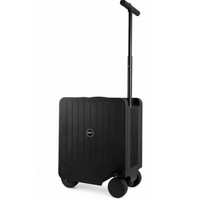
| Summit Glide Classic | ₱29,990 / ₱35,990 | 35L | 95.7Wh (25.2V / 3.8Ah) removable | Body 8.20kg + battery 555g ≈ 8.76kg; max load 120kg; dims 39×24×50cm | Clean hardside shell, hidden footrests, TSA lock — strong for simple hotel→curb→terminal runs |
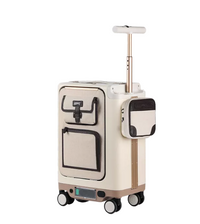
| Summit Glide Edge | ₱32,990 / ₱39,990 | 38L | Same 95.7Wh removable | Body 6.5kg without battery ≈ 7.06kg with battery; laptop pocket + detachable bag | Better when documents, laptop, and small essentials need quick access on transfer day |
Both models are smart ride-on luggage with powered movement for permitted, controlled, low-risk areas only. Specs above come from live PDPs; they are shopping facts, not airline approvals.
Need a deeper model pick? Read Summit Glide Classic vs Edge Philippines.
Pack for access on transfer day
Airport transfers punish deep packing. Put passports, IDs, boarding passes, phones, chargers, and cash where you can reach them at the curb without emptying the main case.
- Edge lists a laptop compartment, front utility pockets, and a detachable matching bag — useful when hotel checkout and drop-off happen in one rush.
- Classic suits travelers who want a minimalist 35L hardside and fewer exterior pockets.
- Keep the removable battery in its planned carry position early. Both Classic and Edge list 95.7Wh — under the common 100Wh carry-on threshold many airlines reference — but always confirm with your airline and route. Use the removable battery travel gear guide and the PAL/Cebu Pacific battery page for process context, then verify the current trip.
Also pack a short transfer checklist (paper or phone note): drop-off door letter/number if known, parking level, hotel shuttle time, and who holds the battery during curb waits.
When to power vs roll on transfer corridors
Powered ride-on use is a judgment call, not a default.
More likely to power (if venue rules allow): smooth, dry, uncrowded indoor parking corridors; long permitted terminal approach halls; quiet early-morning hotel lobby stretches.
Usually roll or carry instead: wet entrances, curb congestion, escalators, stairs, packed family queues, staff-directed lanes, or any area with a “no personal vehicles / devices” style restriction.
Move slowly, leave space, and stop powered mode immediately if a guard, airline employee, or venue sign tells you to. Summit Glide does not override airport or hotel policy. For broader product context, see electric luggage in the Philippines and electric luggage for domestic trips.
Hotel ↔ airport: make the corridor boring
A good transfer day is boring on purpose.
Leaving the hotel: confirm checkout time, lift capacity, and whether the lobby allows wheeled luggage only. If you stayed with smart travel gear, the hotel stays Philippines guide covers stay-side habits; this page focuses on the outbound transfer to the airport curb.
Self-drive / parking: note which entrance you used, elevator vs ramp, and walking distance to doors. Long parking walks are where a ride-on suitcase can help — only if surfaces are permitted and safe.
Grab / taxi / hotel shuttle: keep the suitcase closed at the curb, documents in an accessible pocket, and the battery plan ready before you enter the terminal process covered by the airports guide.
Arrival pickup: reverse the same corridor. Do not assume powered use on wet night curbs or crowded arrivals lanes.
Transfer-day checklist (printable mental model)
Use this as a short pre-departure list so the curb stretch stays calm:
- Confirm vehicle or shuttle pickup window and which terminal curb letter you need.
- Place IDs and boarding passes in the most reachable pocket (Edge front pockets / detachable bag, or a Classic top-access pouch you designate).
- Decide where the removable 95.7Wh battery rides during the curb wait — usually with you, not buried in the main case.
- If self-driving, screenshot parking level and elevator bank before you walk to doors.
- Agree who rolls vs who handles documents when traveling as a pair or family.
- At any staff instruction or unclear sign, switch to normal roll/carry mode without debate.
That checklist is intentionally operational. It does not replace airline battery rules or the terminal process guide — it keeps the transfer corridor from becoming the stressful part of the trip.
Honest limits (read before you buy)
- No boarding or check-in guarantees. Staff and airline policy decide.
- No claim that ride-on mode is allowed in every Philippine airport zone.
- No invented competitor scrapes or fake reviews.
- Battery (95.7Wh) and baggage rules depend on carrier, aircraft, route, and staff decision — confirm directly before travel.
- Use only in permitted, controlled, low-risk areas.
If you need product help before a flight, use Contact & FAQs. For service terms, see Warranty & After-Sales Support. Browse current models in the Smart Luggage collection.
FAQ
Can I use ride-on luggage for the whole airport transfer in the Philippines?
Only where rules and conditions allow. This page covers curb, parking, and hotel↔terminal corridors. Inside terminals, follow the Philippine airports guide and staff instructions. If an area is crowded, wet, restricted, or unsafe, roll or carry normally.
Classic or Edge for hotel-to-airport transfer days?
Classic (₱29,990, 35L, ≈8.76kg with battery) fits simple hardside transfer runs. Edge (₱32,990, 38L, ≈7.06kg with battery) fits transfer days that need laptop/pocket access and a detachable bag. Compare both on the Classic vs Edge page.
Is the 95.7Wh battery automatically airline-approved?
No. Both Summit Glide models list a removable 95.7Wh lithium-ion battery on live PDPs (24 Sep 2026). That is a useful shopping fact under many common 100Wh references, but it is not a substitute for airline confirmation on your exact route.
Does this page replace terminal or battery guides?
No. Keep ownership clear: this page = transfer corridor planning; airports guide = terminal process; PAL/Cebu and removable-battery pages = battery handling detail.
Next steps

Written by Jonathan Del Mundo